Email

How PDC Drill Bits Outperform Roller Cone Bits in Australian Hard Rock Drilling

Australia's mining and exploration sectors frequently operate in some of the world's most demanding geological environments. Characterized by high unconfined compressive strength, extreme abrasiveness, and variable formations, these conditions challenge even the most robust drilling equipment. In such settings, PDC drill bits (Polycrystalline Diamond Compact drill bits) are increasingly demonstrating clear superiority over traditional roller cone bits, delivering higher efficiency, longer runs, and better overall economics.

The Challenges of Australian Hard Rock Formations

Australian hard rock drilling often involves abrasive quartz-rich formations, granites, quartzites, and metamorphic rocks prevalent in regions like the Pilbara, Goldfields, and various mineral provinces. These formations typically feature high quartz content — often exceeding 40% — which creates severe abrasiveness that rapidly wears down cutting structures. In addition, uniaxial compressive strengths frequently surpass 150–300 MPa in competent zones, while interbedded layers introduce sudden transitions in hardness and fracturing. Compounding these difficulties are the deep drilling requirements and high operational costs driven by remote logistics and expensive rig downtime.

As a result, traditional methods struggle significantly in these conditions, leading to low rates of penetration (ROP), frequent bit trips, excessive vibrations, and elevated cost per meter. These challenges make bit selection critical for project success in Australian mining and resource development.

Understanding the Fundamental Differences: PDC vs Roller Cone Cutting Mechanisms

The performance gap originates from how each bit interacts with the rock:

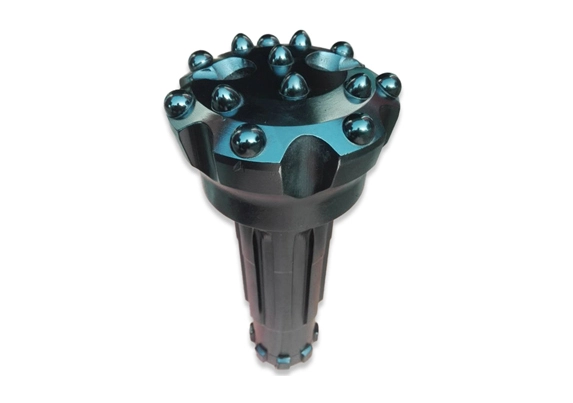
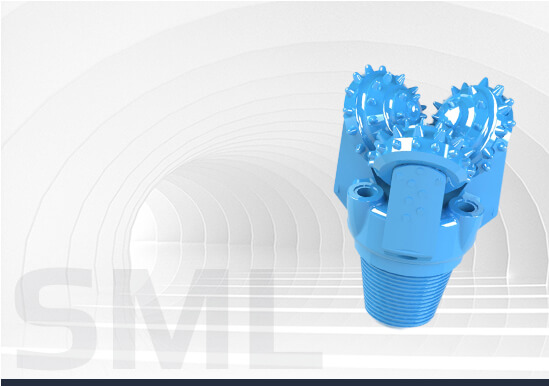
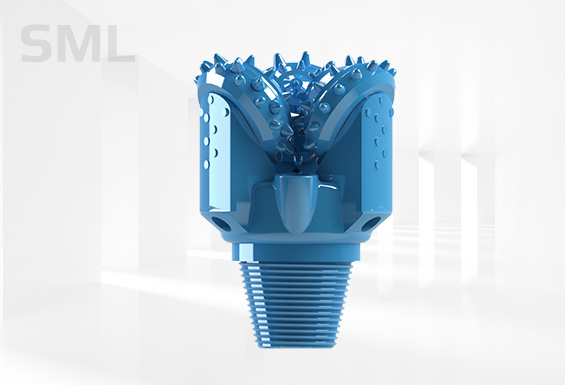
Roller cone bits (also known as tricone bits) rely on a crushing and grinding action. Their rotating cones equipped with tungsten carbide inserts or milled teeth impact and pulverize the formation under weight-on-bit (WOB) and rotation. This mechanism works across a wide range of formations but is less efficient in consistent hard rock, where energy is largely consumed in crushing rather than removing material.

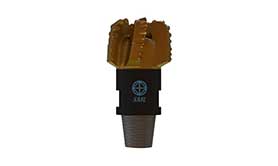
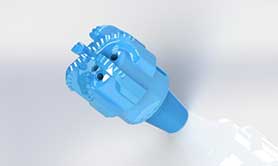
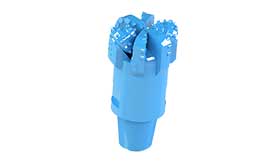
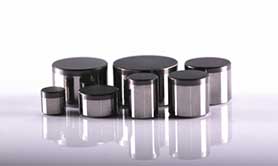
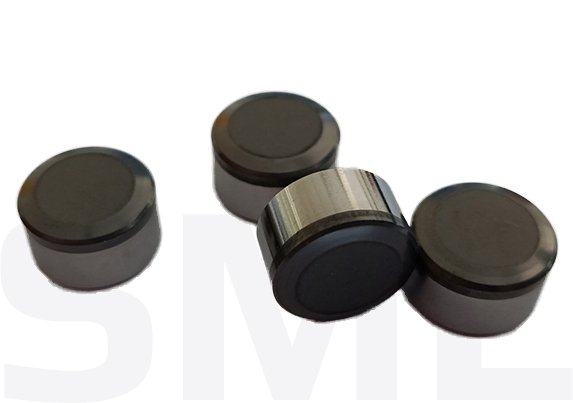
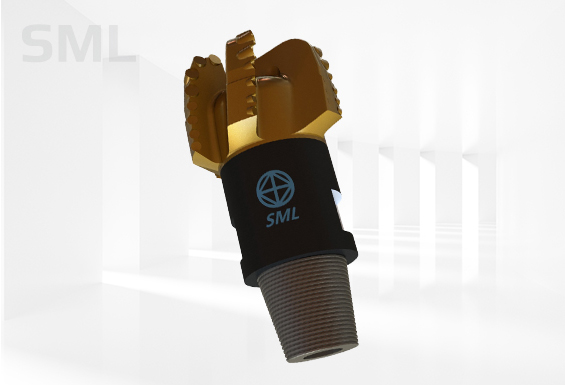
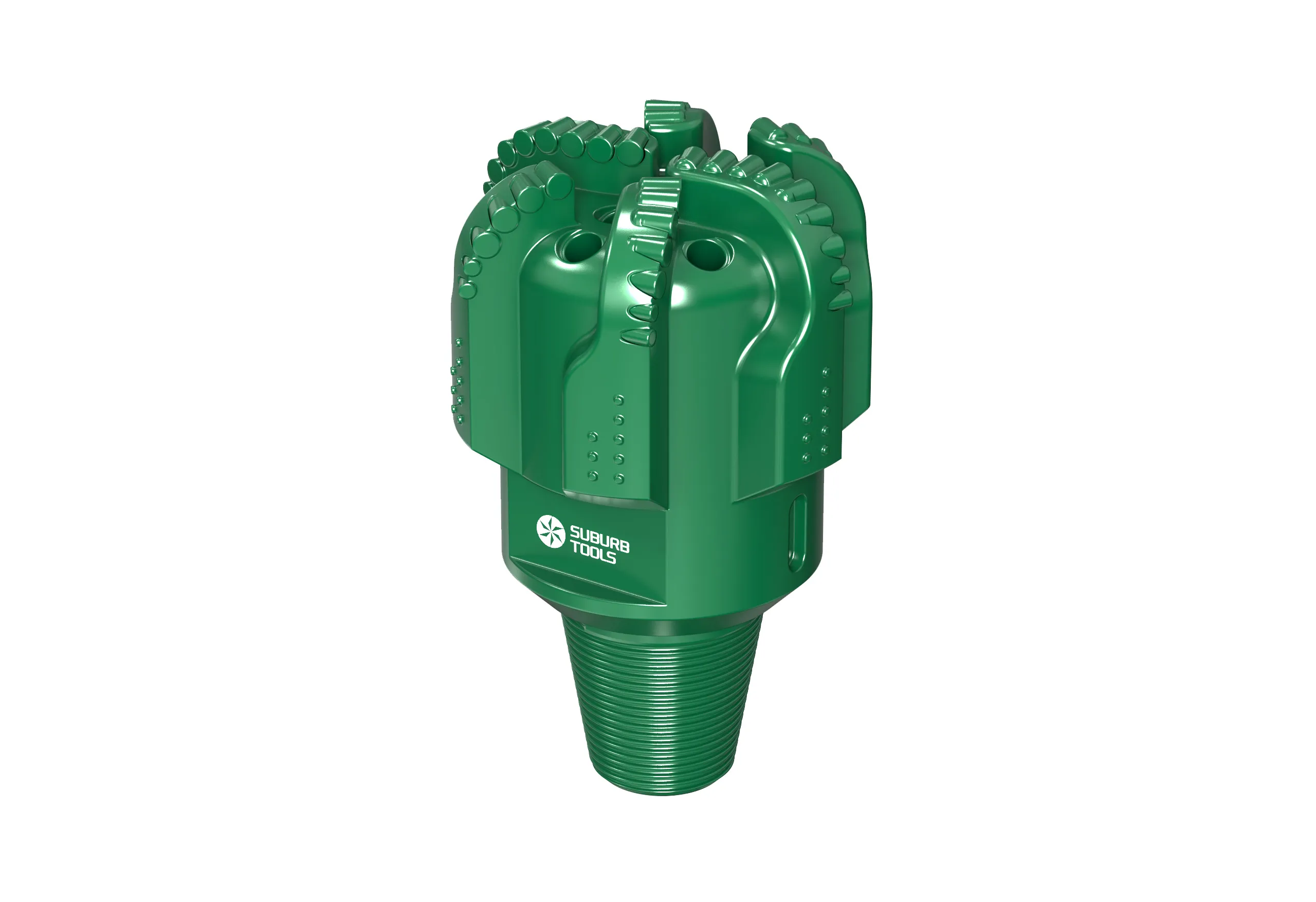
PDC drill bits, in contrast, use fixed polycrystalline diamond compact cutters that shear the rock in a continuous scraping action. The synthetic diamond layer provides extreme hardness and abrasion resistance, allowing the cutters to maintain a sharp edge while efficiently slicing through the formation. With no moving parts like bearings or cones, PDC bits reduce mechanical failure points and deliver smoother drilling dynamics.

This shearing mechanism is particularly advantageous in uniform, abrasive hard rock typical of Australian conditions, where PDC bits convert more energy into actual rock removal rather than heat and vibration.

Key Performance Advantages of PDC Bits in Hard Rock Applications

In suitable Australian hard rock environments, PDC drill bits consistently outperform roller cone bits across several critical metrics:

Higher Rate of Penetration (ROP)

PDC bits often achieve 50–150% or greater ROP compared to roller cone bits in competent formations. The continuous shearing action enables faster progress, significantly reducing overall drilling time.

Extended Bit Life and Durability

Without rotating cones or bearings, PDC bits resist the abrasive wear that plagues roller cone bits. Premium diamond cutters maintain sharpness longer in quartz-rich formations, leading to longer runs and fewer bit changes.

Reduced Vibrations and Improved Stability

The smooth shearing minimizes torque fluctuations and downhole vibrations, protecting the bottom hole assembly (BHA) and improving hole quality.

Lower Cost per Meter

Although initial investment may be higher, the combination of faster ROP, longer life, and reduced non-productive time (NPT) results in superior economics. This is especially valuable in Australia, where rig rates and logistics amplify downtime costs.

Modern advancements in PDC cutter technology, bit hydraulics, and blade designs have further expanded their applicability in challenging abrasive conditions.

Practical Benefits and Selection Guide for Australian Operations

Operators in Australian projects report tangible gains with PDC drill bits: faster completion of blast holes, exploration bores, and production drilling; reduced bit consumption; and improved project timelines. Cleaner cuttings and better hole cleaning also contribute to operational efficiency and environmental benefits.

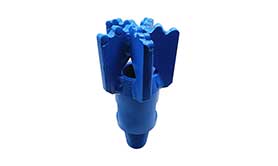
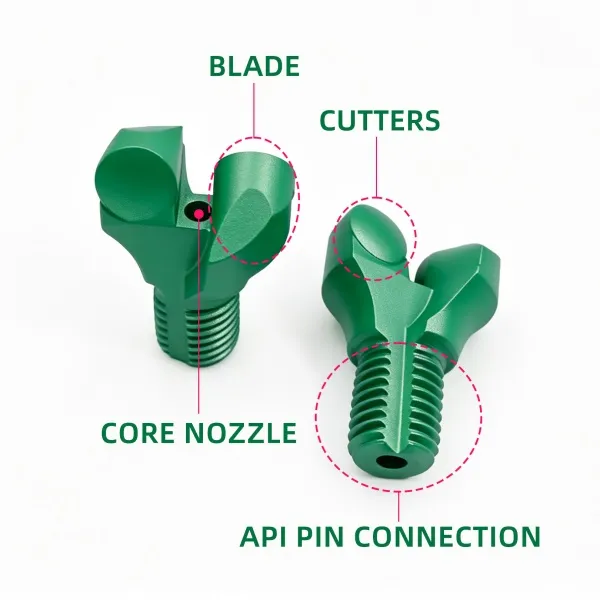
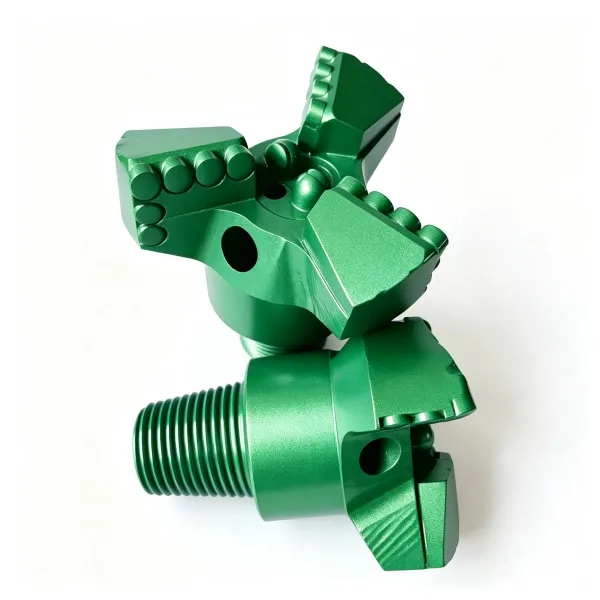
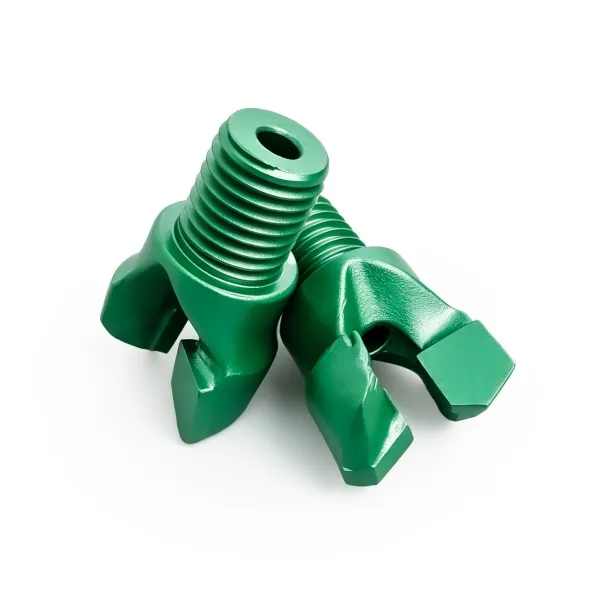
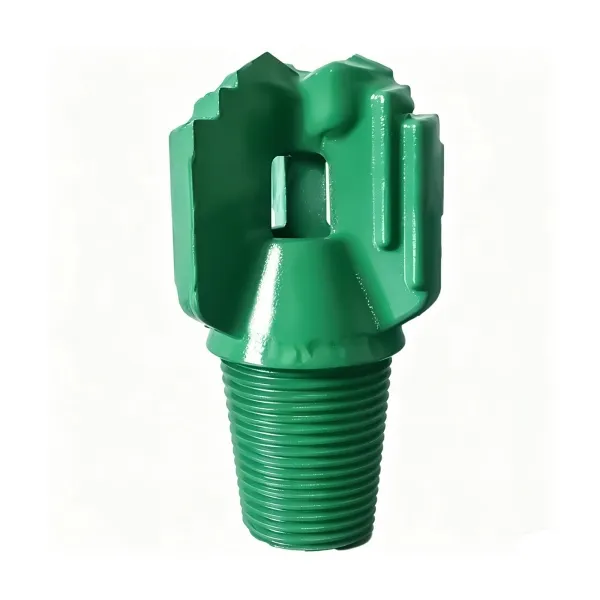
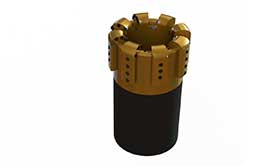
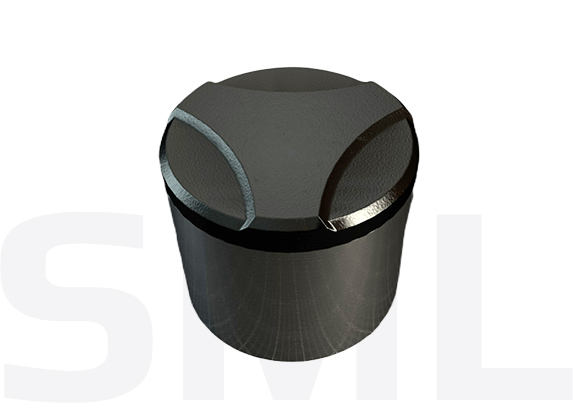
SML Tools offers a comprehensive range of PDC drill bits, including matrix body and steel body options, designed specifically for demanding applications. Key features include premium PDC cutters, optimized blade profiles, and advanced hydraulics for superior cooling and cuttings evacuation — essential in high-abrasion Australian hard rock.

Selection Guide:

· Assess formation abrasiveness, UCS, and homogeneity.

· Choose higher blade counts and denser cutter layouts for highly abrasive quartzite/granite.

· Match bit profile and hydraulics to rig capabilities and mud system.

· Consider hybrid designs for interbedded sections.

Consulting with SML Tools' technical team ensures the right PDC drill bit is selected for your specific geology and objectives.

Conclusion

In Australia's tough hard rock drilling environments, PDC drill bits outperform traditional roller cone bits by leveraging superior shearing mechanics, exceptional durability, and operational efficiency. The result is faster penetration, longer bit life, reduced costs, and greater reliability — delivering a clear competitive edge for mining and exploration projects.

Ready to enhance your drilling performance? Explore SML Tools' full line of PDC drill bits or contact our experts for personalized recommendations tailored to Australian conditions.

FAQ

1. Are PDC drill bits suitable for all Australian hard rock formations?

PDC drill bits excel in uniform, abrasive hard formations like quartzite and granite. For highly interbedded or extremely impact-prone sections, a detailed formation analysis is recommended, and hybrid solutions may be considered.

2. How much faster can PDC bits drill compared to roller cone bits in hard rock?

In suitable conditions, PDC bits commonly deliver 50–150% higher ROP, though actual gains depend on specific geology, rig parameters, and bit optimization.

3. What makes SML Tools' PDC drill bits effective in abrasive Australian conditions?

SML's bits feature high-quality PDC cutters, robust matrix or steel bodies, and optimized hydraulics designed for excellent abrasion resistance, cooling, and cuttings removal.

4. How do I choose the right PDC drill bit for my project?

Key factors include rock hardness, abrasiveness (quartz content), drilling depth, and rig specifications. SML Tools provides expert consultation to match the bit precisely to your needs.

We use cookies to offer you a better browsing experience, analyze site traffic and personalize content. Part of the tracking is necessary to ensure SEO effectiveness,
By using this site, you agree to our use of cookies. Visit our cookie policy to learn more.
Reject Accept